Two cabinets can be built from the same timber, finished with the same lacquer, and still sit twenty years apart in the way a visitor reads them. The difference is usually the fittings: the handles, hinges, escutcheons and backplates that take the hand first. They are the only parts of a classical piece a person actually touches, and they are the easiest to replace with something that does not belong.
This guide works through the fittings one by one — what each does, what period it belongs to, and how to match a set to a piece already in the room. See our Ekar Customized Products case line.
A handle is a lever first and an ornament second. On early classical work the two jobs are kept separate: a plain turned knob or a simple bail for the hand, and the decoration carried by the backplate behind it. Later revival pieces often merge the two, which is why a heavily moulded pull can look busy on a quiet cabinet.
A cast pull with a solid shank, a square section into a drilled hole, and a nut or a split pin behind it has been made to last. A folded sheet-metal pull with two self-tapping screws will work, and will also work loose — the holes enlarge, the pull drops, and the front has to be made good. A dining cabinet works the same pull daily — see Classic Luxury Design — Dining Room.
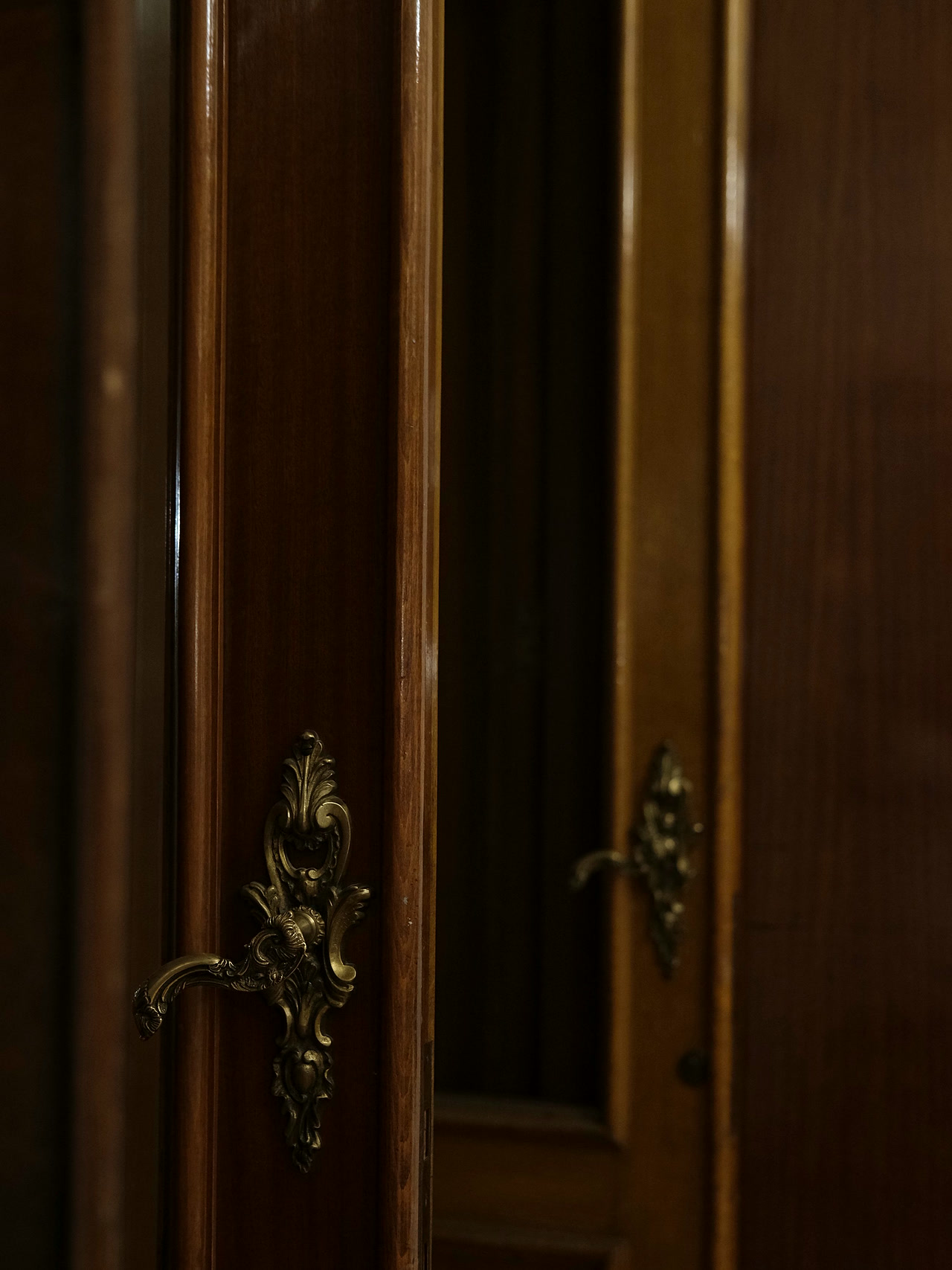
An escutcheon protects the wood around a keyhole and gives the key something to run against. It is also the fitting that most often survives when everything else has been changed, so it is a useful dating clue: the shape of the keyhole, the thickness of the brass and the way the plate is fixed all point to a period.
On a piece with a working lock, the plate should line up exactly with the key way and sit flat against the face. On a decorative or dummy lock the plate is pure ornament and can be freer — but it still needs the same shallow bed let into the timber, or it will stand proud and catch on everything.
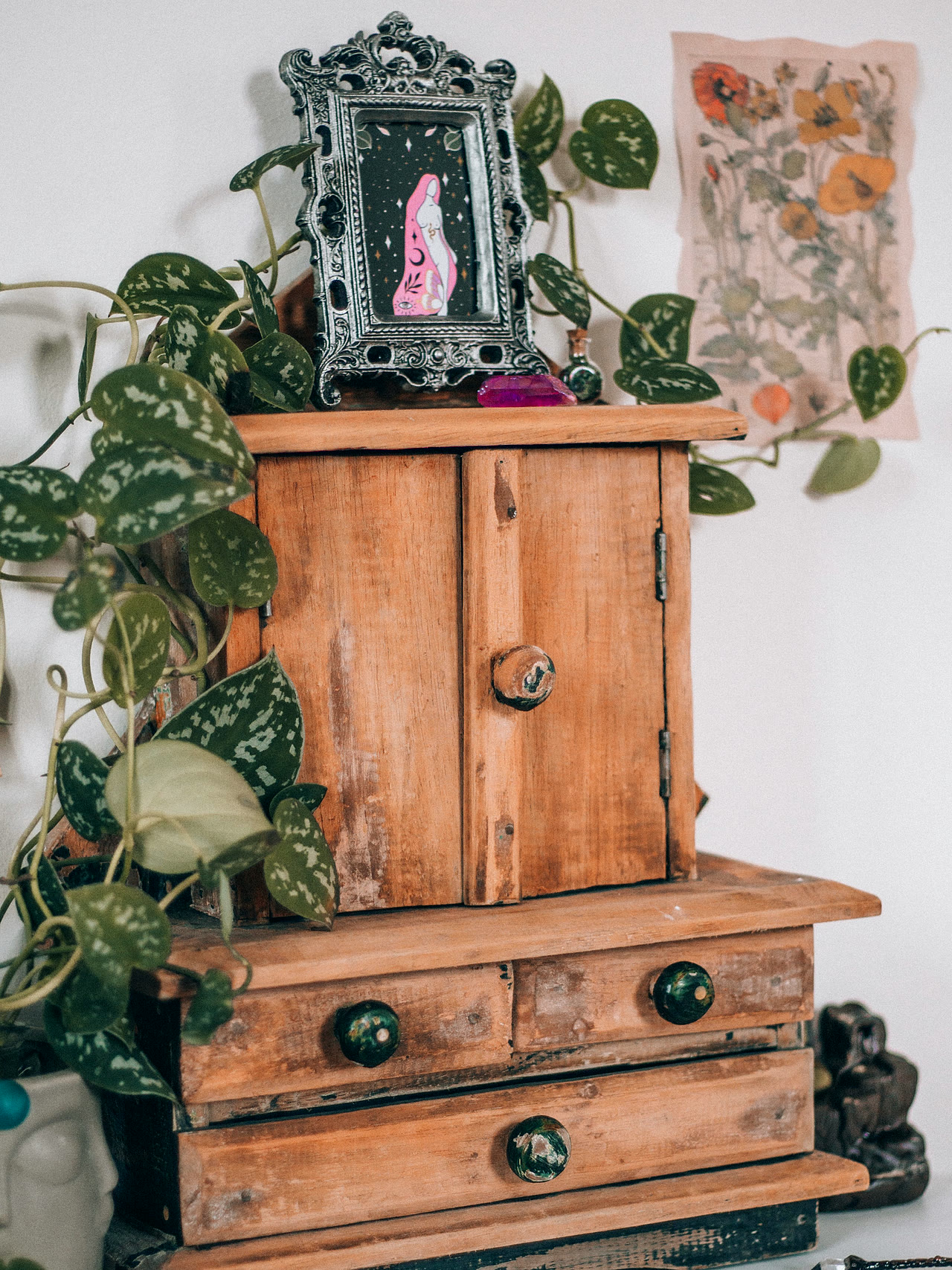
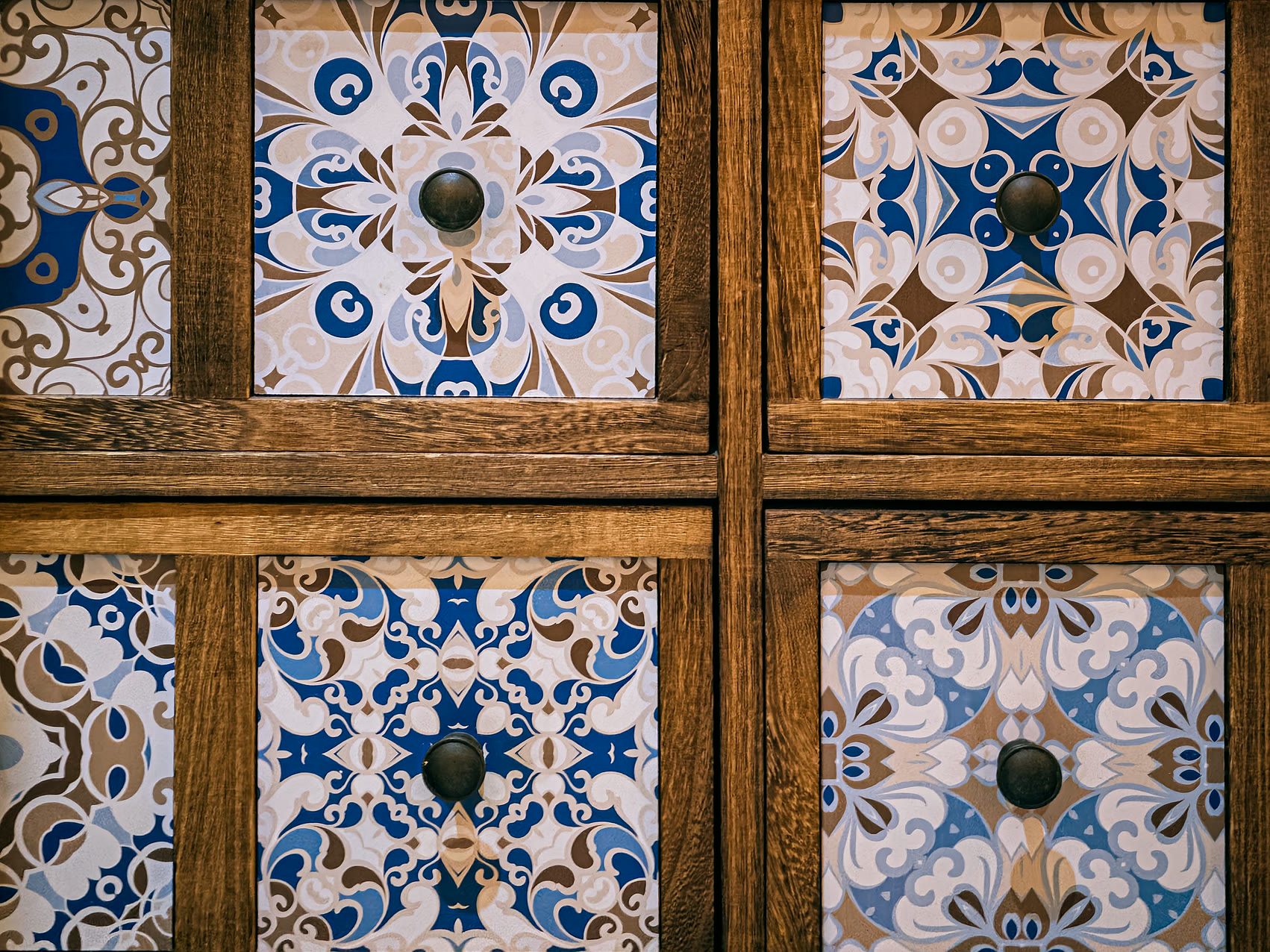
A door hinge does three things: it carries the weight, it holds the door in line, and it lets the door be adjusted. Classical casework usually uses butt hinges let into both the door edge and the carcase, so the leaf sits flush when the door is closed.
For a heavy door, the question is not the hinge type but the number and the gauge. A tall glazed door wants three hinges, not two: two will carry the weight, and the third stops the door from twisting as it swings. Brass is the usual choice on classical work because it carries the load without rusting at the pin, and because it can be left to age. Wardrobe doors load a hinge hardest — see Classic Luxury Design — Bedroom.
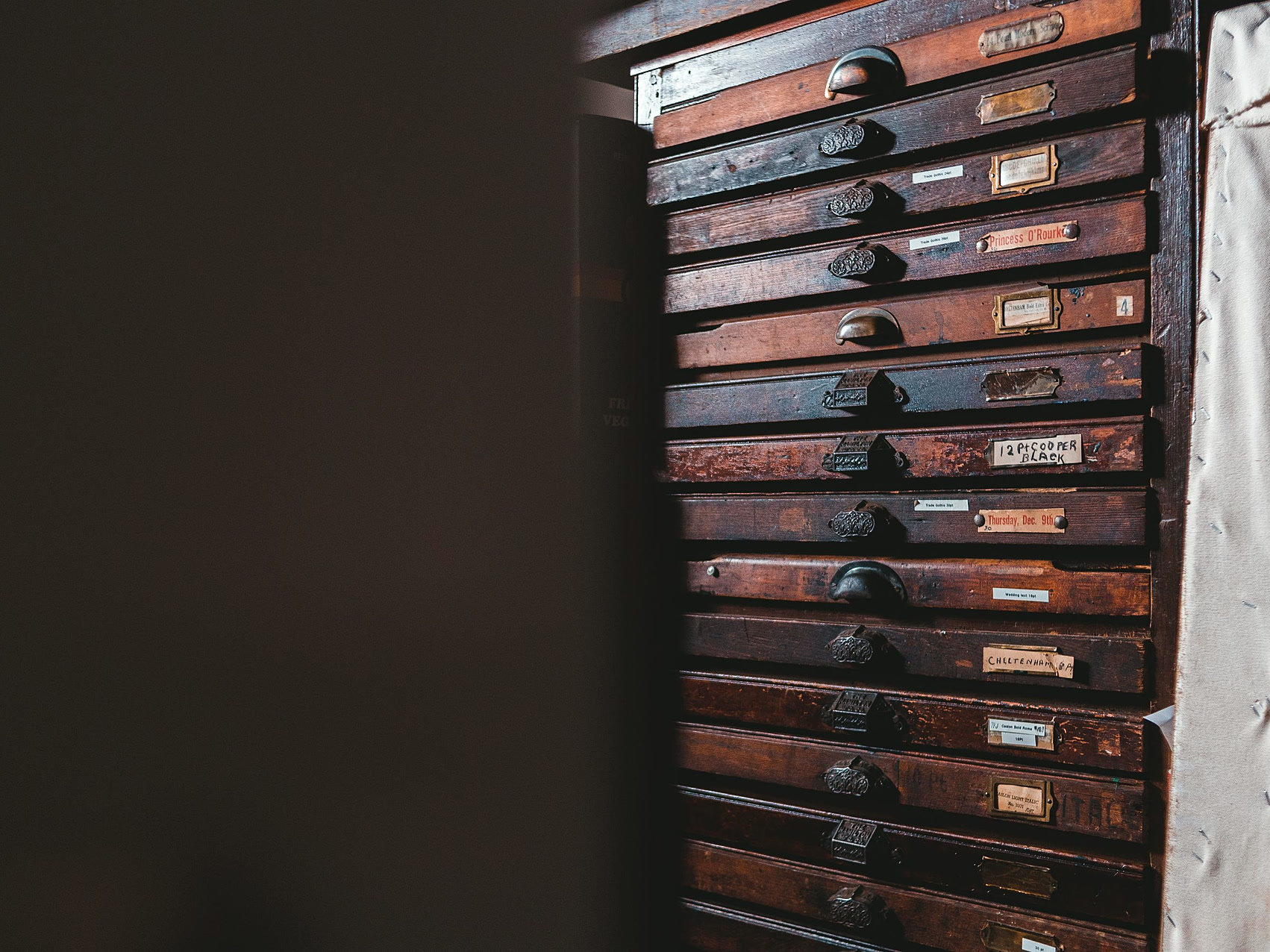
Fittings are usually specified as brass, and brass is not one material. The colour depends on the alloy and on what has been done to the surface: a high-copper brass ages to a warm brown, a higher-zinc brass stays yellower for longer, and a lacquered finish holds the bright colour by sealing it away from the air.
For a piece that is meant to look settled rather than new, the honest route is an unlacquered fitting that is allowed to darken, or a hand-aged finish applied evenly across the whole set. The mistake is to mix them: one bright lacquered handle beside three aged ones is the detail that makes a restored piece look assembled rather than designed.
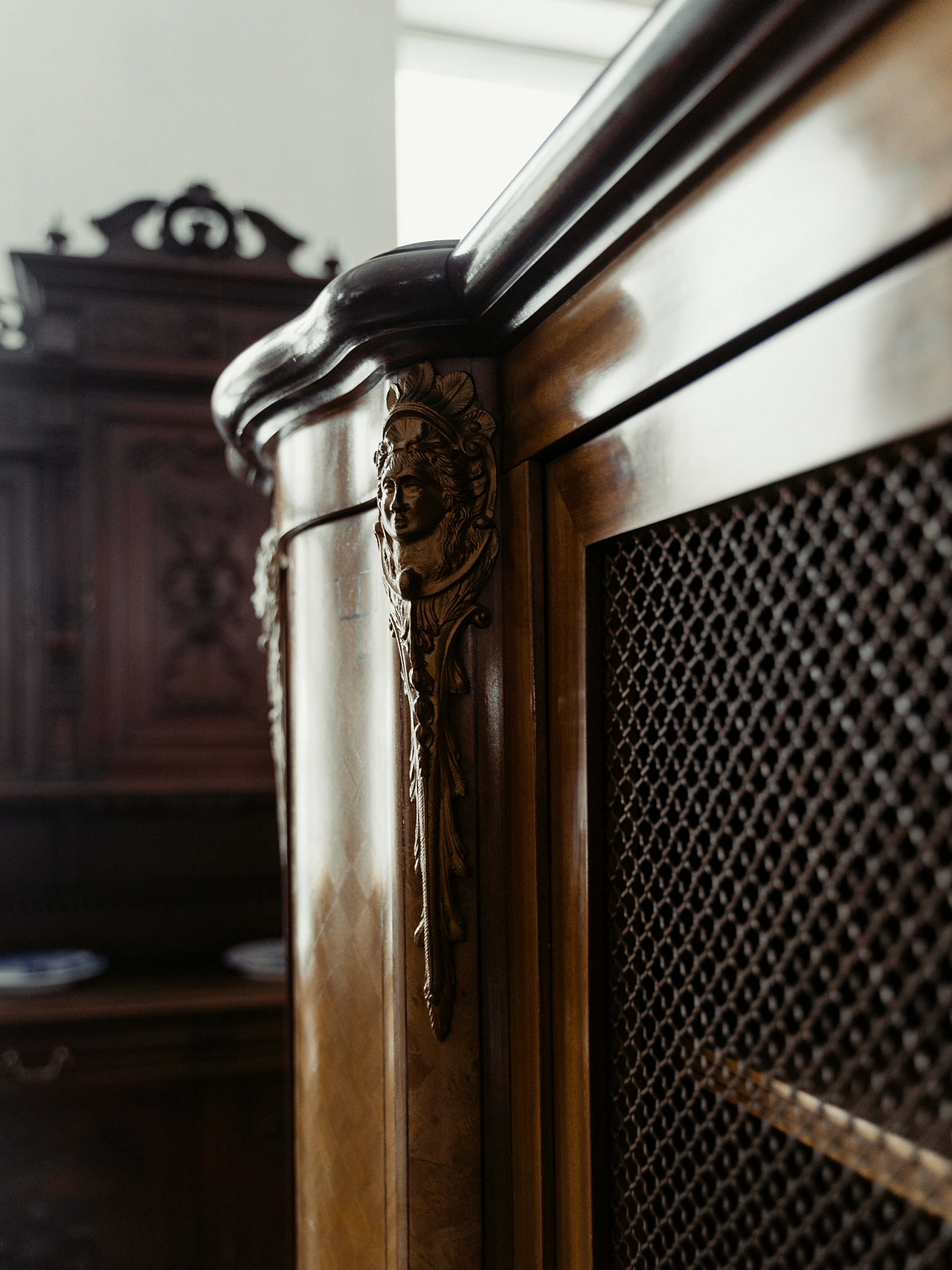
If a piece already exists and only the fittings are missing, work from the evidence rather than from a catalogue. The old fixing holes are the most reliable record: their spacing, their diameter and their depth tell you what was there and how heavy it was. Re-drilling at a different spacing is possible, but each new hole is a permanent mark.
Where the original is unknown, the safe rule is to keep the fitting quieter than the piece. A carved front with a plain bail will read correctly for almost any classical period; a plain front with a heavily moulded pull tends to look like a later addition.
Where two fittings must sit side by side, match the finish first and the pattern second. An unmatched pattern reads as a curiosity; an unmatched finish reads as a defect. Desks show fittings closest, because they are read at arm's length — see Classic Luxury Design — Home Office.
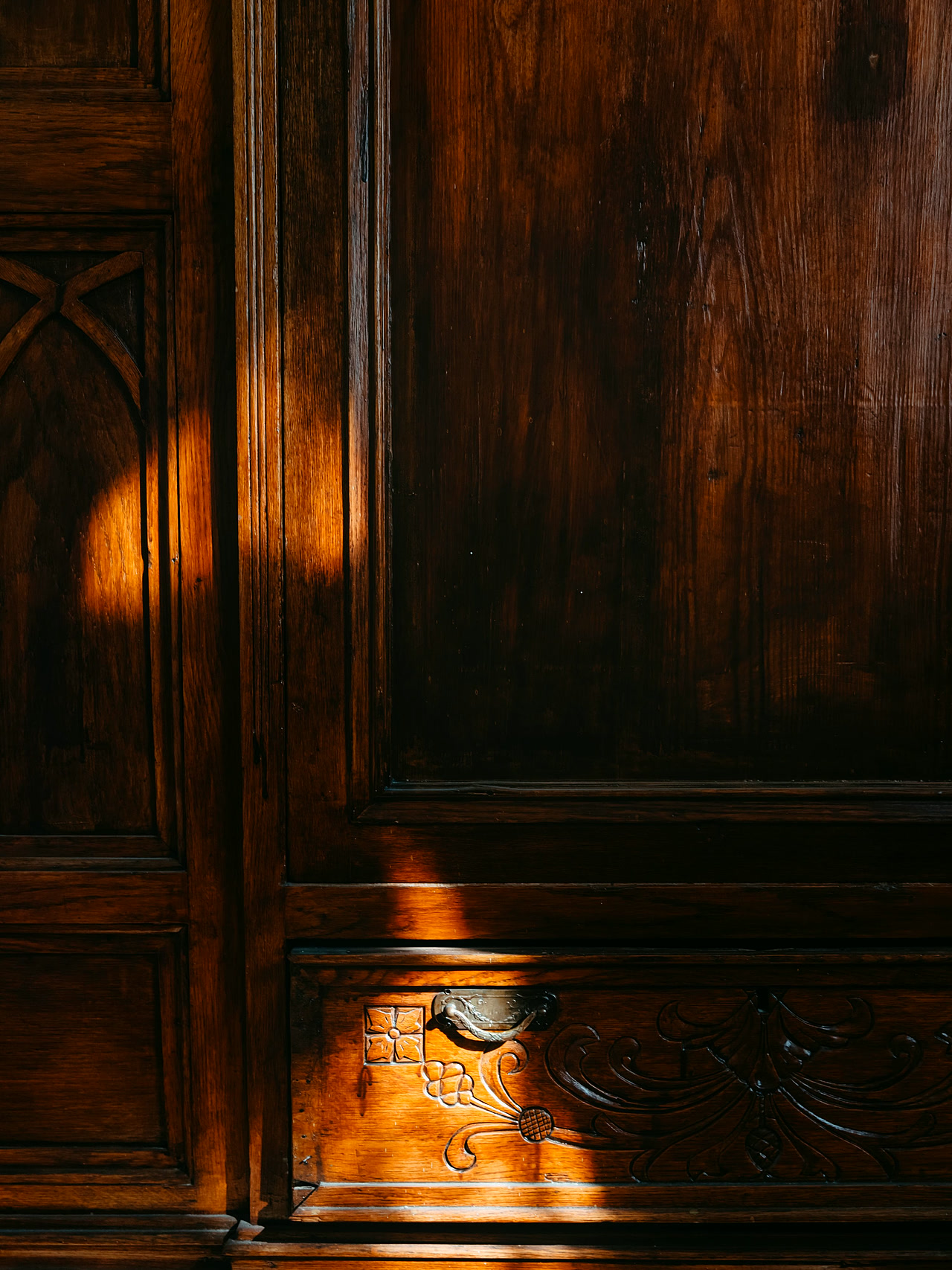
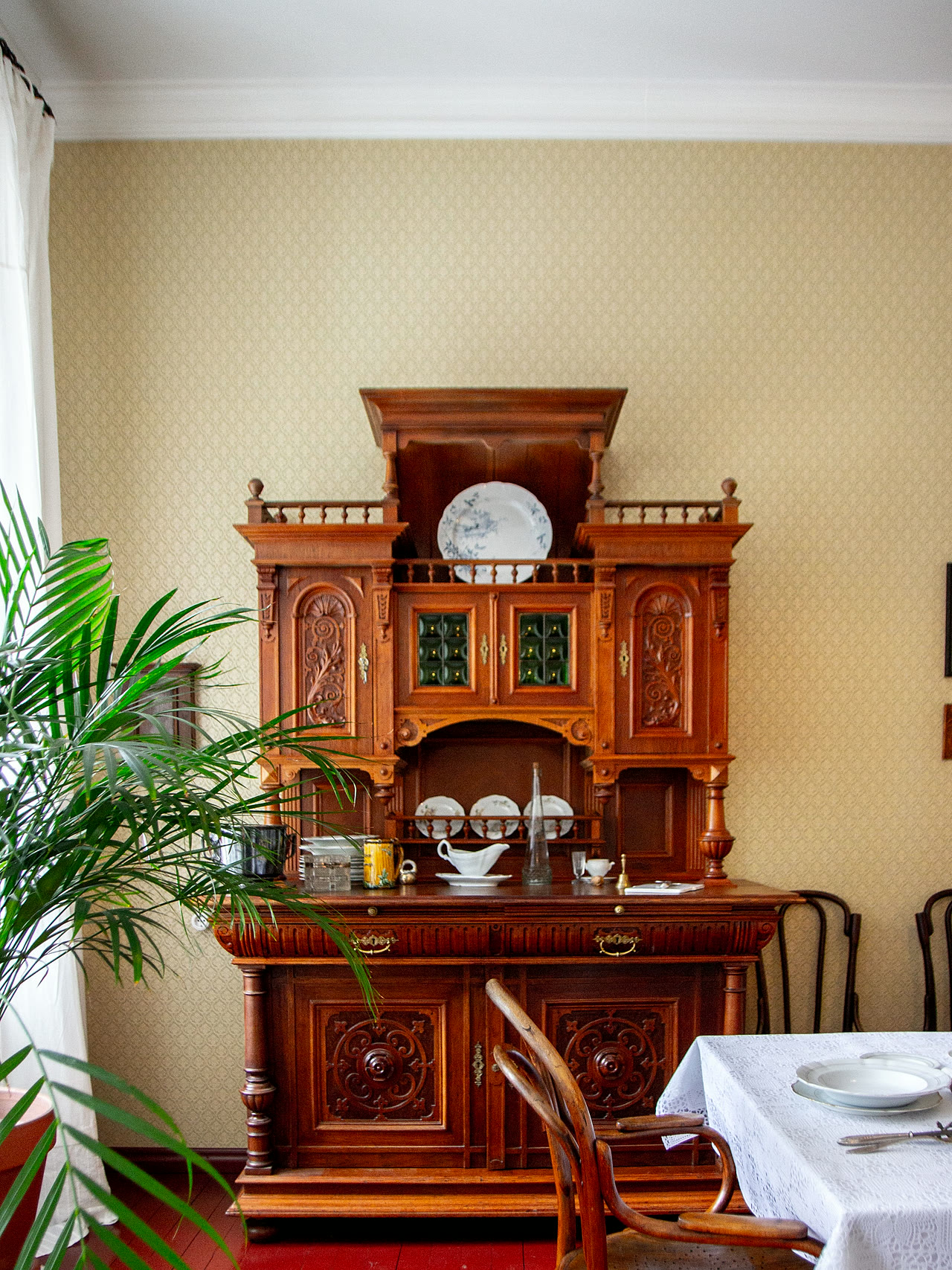
Fittings are usually the last item specified and the first one missed. A set chosen together — handles, escutcheons, hinges and any glass or shelf hardware in the same finish — removes the single most common reason a new classical piece reads as a collection rather than as a piece. All of it is made to order under Customized Furniture.
Send us a photograph and the measurements above, and we will come back with a fittings schedule you can check line by line, alongside the carving, veneer and finish it has to sit with.
Browse French Elegant Style or the full All Cases index. Reach us through Contact Us — EKAR FURNITURE.